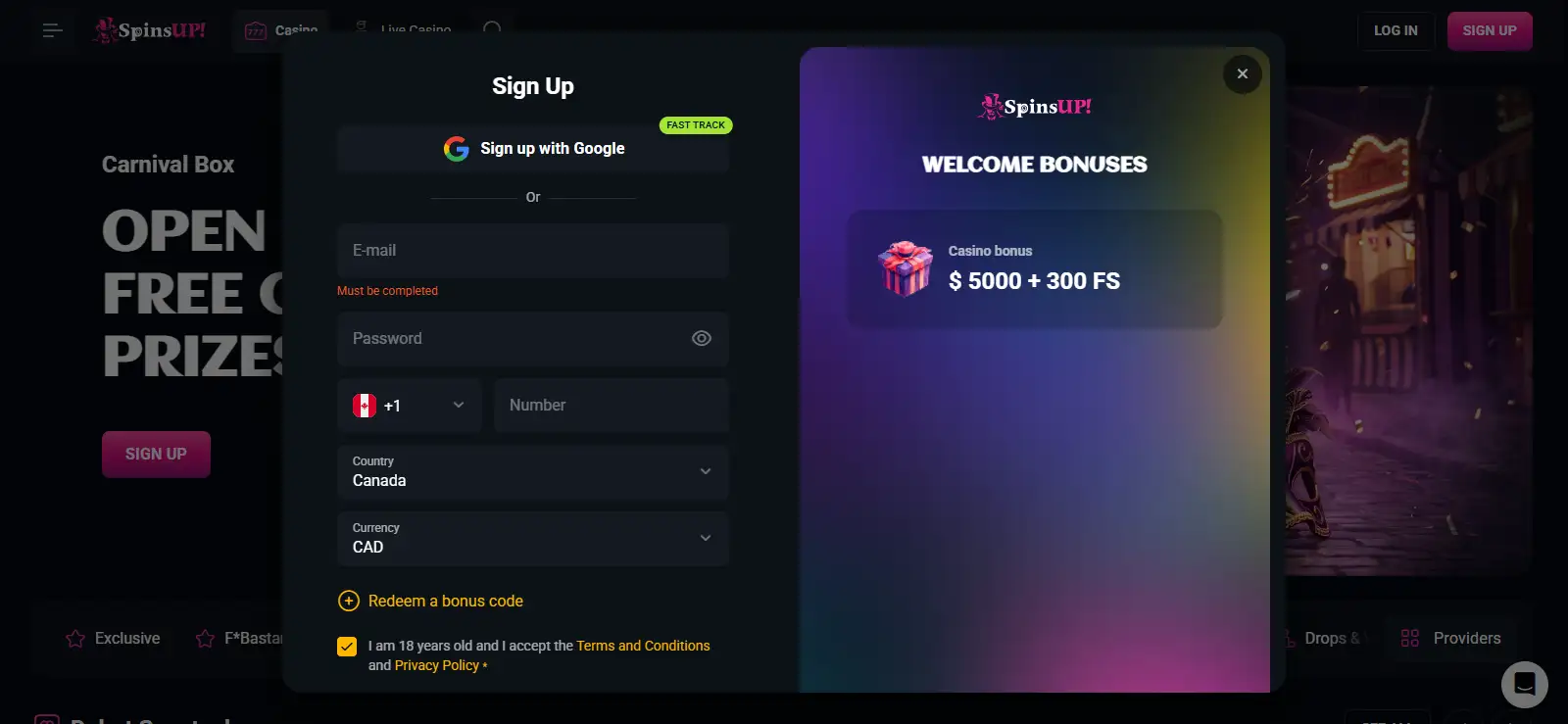
Verification
SpinsUP KYC and account verification
 Available in AU
SpinsUP can request identity verification before processing withdrawals. Its current policies list a valid government-issued photo ID and proof of address as core document categories, with payment-method evidence or other supporting information potentially requested when relevant. The exact request can depend on the account, so do not assume every user will be asked for the same files. The most useful preparation is to keep your name, address and payment ownership consistent across the account and the documents you may need to provide.
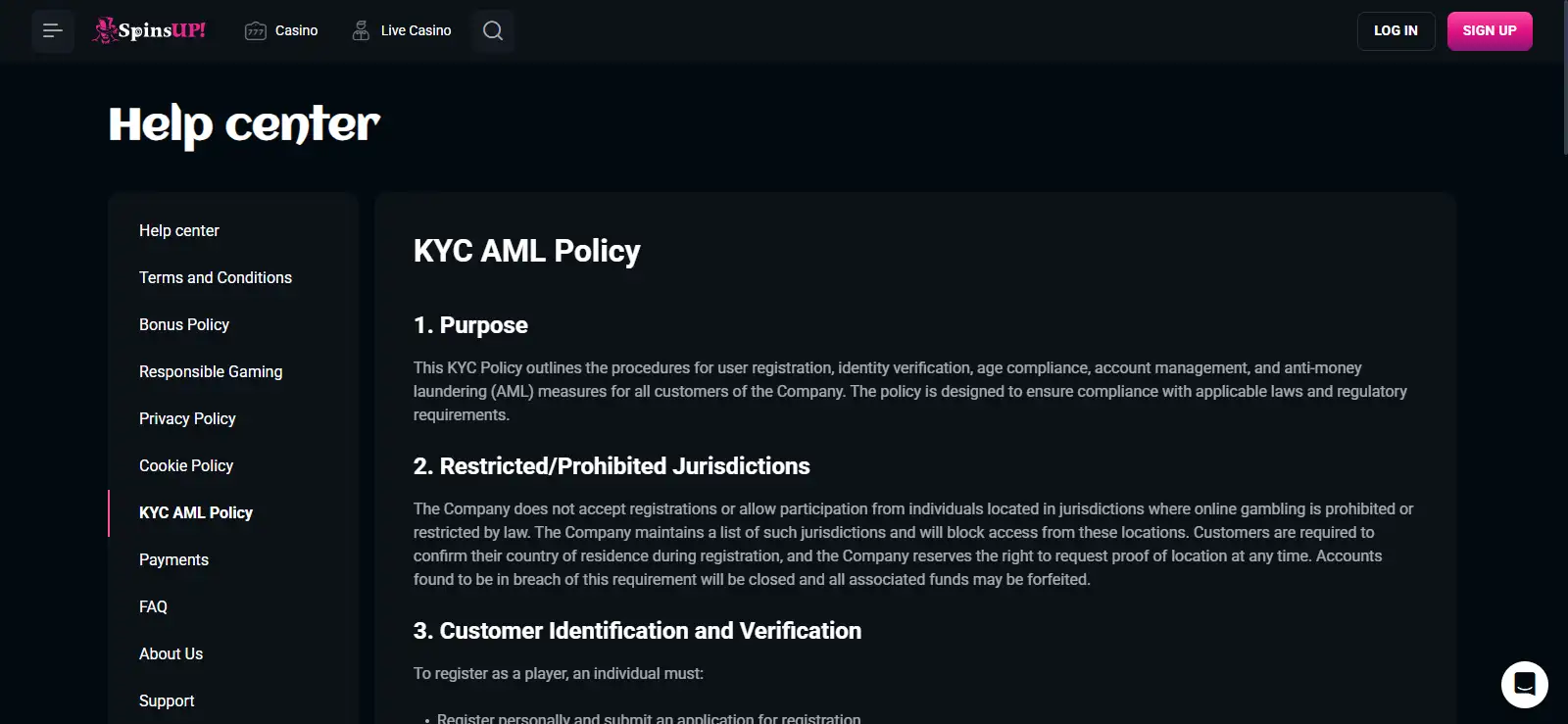
Table of Contents
- What SpinsUP can ask you to prove
- KYC is an identity check, not a one-size-fits-all document pack
- Photo ID should match the account holder
- Proof of address is about consistency as much as the document type
- Payment evidence can matter when funding and cashout do not line up cleanly
- Verification can become a withdrawal dependency
- Prepare files so they are readable before uploading
- Additional checks do not mean the standard list was wrong
- What not to assume about SpinsUP verification
- Resolve account mismatches before they reach cashout
- SpinsUP KYC questions
- How verified documents can reduce friction at SpinsUP cashout
What SpinsUP can ask you to prove
| Verification area | Examples in current SpinsUP policies | What to check before submitting |
|---|---|---|
| Identity | Government-issued photo ID such as a passport or driver’s licence | Name and personal details should match the account |
| Address | Utility bill or bank statement | Address should be readable and consistent with the account |
| Payment ownership | Card or e-wallet evidence can be requested | Use a payment method that belongs to the account holder |
| Additional checks | Further information or documents may be requested | Respond to the specific request rather than guessing |
KYC is an identity check, not a one-size-fits-all document pack
SpinsUP’s AML/KYC policy allows the operator to verify identity and contact details and to request additional documents when needed. The baseline categories are straightforward: government-issued photo identification and proof of address. The Terms also allow evidence connected to the payment method to be requested.
That does not mean every account receives an identical request. One user may only need the standard identity and address checks, while another account can require additional information because of payment ownership, account activity or a specific compliance review. The right response is to follow the request attached to your account rather than uploading a generic bundle of personal files.
The broader account guide explains where verification sits between registration and cashout. For the form itself, see the SpinsUP registration guide.
Photo ID should match the account holder
Current SpinsUP policies name government-issued photo ID as a core verification document. Examples include a passport or driver’s licence. The practical purpose is to connect the account to a real person and confirm details such as identity and age.
Before uploading an ID, check that the image is clear enough to read and that the document details match the account information. Cropped edges, glare, unreadable text or a different name can create an avoidable mismatch. Do not alter the document image to hide information that the verification request actually requires.
If the account contains an error, correct it through the official route rather than editing a document or creating another account. Verification works best when the account record and the underlying identity evidence tell the same story.
Proof of address is about consistency as much as the document type
SpinsUP’s current policies include proof of address, with utility bills and bank statements given as examples. The important point is not only the document category but also whether the address can be read and matches the address associated with the account.
If you have recently moved, make sure the account information is current before a withdrawal becomes urgent. A document showing an old address can lead to a follow-up request even when the document itself is genuine.
Use the file requested by the casino rather than assuming every bill or statement will be accepted in every case. A verification request can be account-specific, and additional checks are permitted under the current policy.
Payment evidence can matter when funding and cashout do not line up cleanly
SpinsUP can request proof connected to a payment method. Its Terms use card and e-wallet evidence as examples and prohibit deposits from a payment account belonging to someone else. That makes payment ownership one of the easiest issues to prevent before KYC ever starts.
Use a card, bank account, wallet or other funding method in your own name. If the casino asks for proof, follow the instructions about which parts of the payment method need to be visible and which sensitive details should be covered. Never send a full card number, security code or unrelated financial records unless the official verification process explicitly requires the relevant information through a secure channel.
The deposit side is covered separately in the payments section, while the SpinsUP withdrawals guide explains the cashout limits and payment flow without mixing them into KYC document requirements.
Verification can become a withdrawal dependency
SpinsUP’s Terms reserve the right to verify identity before processing a withdrawal. That means a withdrawal request can be held until the required account checks are completed. The practical lesson is to treat KYC readiness as part of cashout planning rather than something to think about only after a large balance is already waiting.
Verification status is only one part of the withdrawal process. Payment method, account ownership and the casino’s withdrawal rules can also affect what happens next. SpinsUP says it aims to process withdrawals within 72 hours of approval, but that target begins after approval and should not be confused with a universal KYC completion time.
If a document request arrives, respond accurately to the requested items first. Repeatedly sending different versions, unclear scans or unrelated documents can make the account history harder to resolve.
Prepare files so they are readable before uploading
- Check the account name. It should match the identity document you intend to use.
- Check the address. Make sure the account and proof-of-address document are consistent.
- Use clear images. Keep all required document edges and details visible unless the instructions say otherwise.
- Use your own payment method. Payment ownership should align with the account holder.
- Submit only what is requested. Extra personal documents do not automatically make verification faster.
- Use the official route. Upload documents through the account or support channel specified by SpinsUP.
This is less about collecting as many files as possible and more about reducing inconsistencies. A small set of clear, matching documents is more useful than a large folder of unrelated evidence.
Additional checks do not mean the standard list was wrong
The standard document categories describe the common starting point, not the outer limit of what can be requested. SpinsUP’s KYC policy allows further checks and additional documents. Depending on the reason for the review, that can involve more identity, payment or financial evidence.
If an additional request is unclear, ask official support what the document is meant to demonstrate before uploading something unrelated. The goal is to satisfy the specific check while limiting unnecessary disclosure.
What not to assume about SpinsUP verification
Do not assume that verification will always happen at registration, that every customer receives the same checklist, or that an account with a successful first deposit is permanently cleared from further review. Current policies allow checks to occur when the operator considers them necessary.
Do not assume that a previously accepted payment method guarantees a withdrawal without further verification. Cashout can introduce identity or payment-ownership checks that were not visible during the deposit stage.
Finally, do not use registration or KYC completion as proof of Australian regulatory approval. Account verification confirms information about the customer; it does not change the separate licensing and regulatory questions covered in the SpinsUP trust and licence section. The SpinsUP overview keeps that distinction alongside the wider account, payment and game context.
Resolve account mismatches before they reach cashout
The simplest KYC problems to prevent are inconsistencies between the account and the evidence used to verify it. Before a withdrawal becomes urgent, check that the account name matches the photo ID, the recorded address can be supported by current proof of address, and the payment method belongs to the account holder. If a detail has changed, use the official account or support route to correct the record rather than waiting for a verification request to expose the mismatch.
This does not create a universal document checklist or a guaranteed verification time. It simply keeps the standard identity, address and payment evidence internally consistent, so any case-specific request can be answered against an accurate account record.
SpinsUP KYC questions
Which identity documents can SpinsUP request?
Current policies list a valid government-issued photo ID, with a passport or driver’s licence given as examples.
What can be used as proof of address?
SpinsUP lists documents such as a utility bill or bank statement. The document should be readable and consistent with the address on the account.
Can SpinsUP ask for payment proof?
Yes. Current Terms allow payment-method evidence to be requested, including card or e-wallet evidence where relevant.
Does every account need exactly the same KYC documents?
No. The policies allow additional checks and documents, so the exact request can depend on the account and the reason for verification.
Can KYC affect a withdrawal?
Yes. SpinsUP can require identity verification before processing a withdrawal, so incomplete KYC can hold up the cashout process.
How verified documents can reduce friction at SpinsUP cashout
Keep the account name and address accurate, use payment methods that belong to you, and make sure the core identity documents you may need are clear and current. When SpinsUP requests KYC, answer the specific request with matching evidence rather than assuming a fixed document pack applies to everyone.
The most important cashout advantage is consistency. If the account, identity document, address evidence and payment ownership all line up, there are fewer obvious discrepancies to resolve when a withdrawal reaches the verification stage.
Created by the ”Spinsup Casino” editorial team.